
Bedroom (EE)


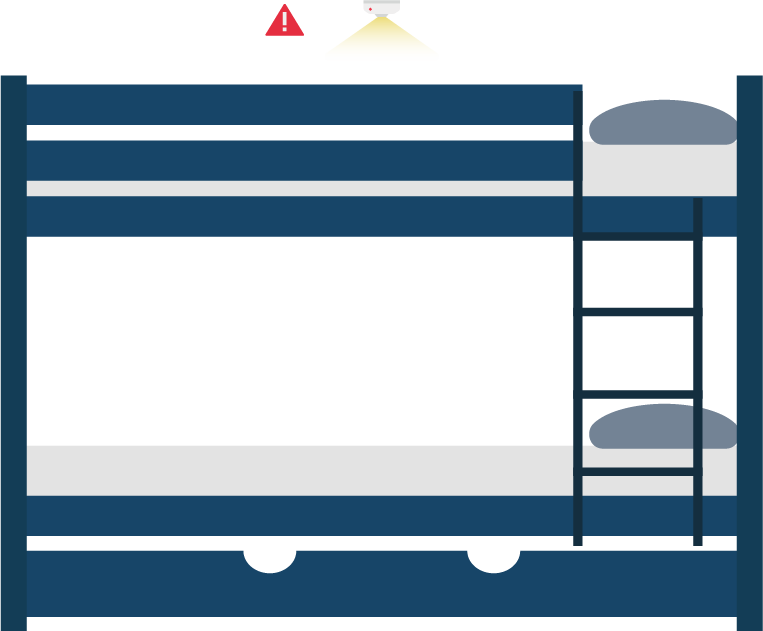

Fire Alarm / Bed
Overcrowding and damp and mould; fire safety
Overcrowding and damp and mould; fire safety
When homes are overcrowded, there is a greater risk of damp and mould. This is because the higher number of people in the home is likely to mean greater levels of moisture in the air, for example through greater humidity from cooking, showering and drying clothes in limited space. Problems with damp and mould caused by overcrowding can be made worse if the home is not well-ventilated, is poorly insulated or in disrepair.
Risk
Risk
Damp can pose health risks as it can lead to high humidity and mould growth. Breathing in mould spores can cause respiratory problems and can worsen existing health conditions such as allergies and asthma. Some groups of people, such as children and babies and people with medical conditions such as asthma, can be at greater risk, so it is important to tackle damp and mould.
Households that are overcrowded are more likely to have damp in their home (14%) than households that were not overcrowded (4%) according to the English Housing Survey. If you live in an overcrowded home (there are a number of ways that overcrowding can be defined: Shelter has a tool which can help you check if your home is overcrowded) then it’s very important to be aware of the greater risk of damp and mould and take action when needed.
Cost
Cost
You may not be able to move to a different home with more room or easily solve problems relating to overcrowding, however, there are actions that you can take to help reduce the moisture in your home.
£ Try to reduce humidity where you can by using extractor fans, dehumidifiers and by ventilating rooms (by opening doors and windows for a short time to allow air flow). You may also want to trial dehumidifier pots or moisture traps, which can be purchased at relatively low cost.
Further information on how to tackle damp and mould caused by overcrowding
Further information on how to tackle damp and mould caused by overcrowding
Read the Good Home Lincs Guide to condensation, damp and mould
Check out the Good Home Lincs information on Common hazards to find out more about how to manage damp and mould in your home.
FIRE SAFETY
It is recommended that you fit a fire alarm in any room which has bunk beds or high sleeper beds. This is because children (who are more likely to sleep in these rooms) are less likely to wake up in the night if fire alarms go off. Bedrooms can also contain lots of electrical items such as laptops, mobile chargers and lamps, which can increase the risk of electrical fires; and the risk of smoke inhalation is higher for children who are sleeping on a top bunk.
Further information
Check out the Good Home Lincs information on Fire safety to find out more about how to keep your home safe from fire.
Take the Online Home Fire Safety Check to get useful information about how to keep yourself safe and how to reduce fire risk in your home.