
Bedroom (EE)


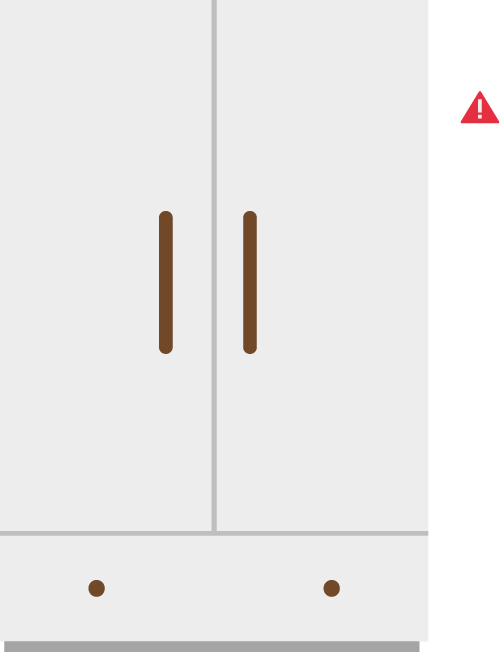

Wardrobe
Damp & mould – “cold bridging” and damp spots
Damp & mould – “cold bridging” and damp spots
Cold bridging can happen when a particular area of the home, such as part of a wall, allows heat to escape through it more quickly. This makes the specific area of the building cooler and means that any warm, moist air will condense in these cooler areas, possibly causing damp and mould. For example, a square patch of damp and mould on an upstairs ceiling may indicate missing or damaged loft insulation. This “cold bridging” effect can be worsened when furniture is placed against walls as air cannot circulate well, and the trapped moist air can condense behind the furniture. This may lead to mould or damp patches on the wall.
Risk
Risk
Damp can pose health risks as it can lead to high humidity and mould growth. Breathing in mould spores can cause respiratory problems and can worsen existing health conditions such as allergies and asthma. Some groups of people, such as children and babies and people with medical conditions such as asthma, can be at greater risk, so it is important to tackle damp and mould.
Cost
Cost
Free If you can, move furniture away from the walls by a few centimetres to allow air to circulate.
£ Try to reduce humidity where you can by using extractor fans, dehumidifiers (which can be run at minimal cost) and by ventilating rooms (by opening doors and windows for a short time) to allow air flow. You may also want to trial dehumidifier pots or moisture traps, which can be purchased at relatively low cost.
££-£££ If cold bridging is caused by a structural issue, you may need to have work done on your home to put the problem right. Installing insulation may also help solve the problem, but the cost of this can vary depending on what needs to be done to your home. You are likely to need to hire a professional to help find and solve any issues. Check out the Good Home Lincs pages on Finding Trusted Tradespeople Look at the Good Home Lincs pages on Paying for Works for information on how to finance repairs.
If you rent your home, you may not be responsible for meeting these costs. Shelter has information on your landlord’s responsibilities Damp and mould in private rented homes
Further information on how to tackle cold bridging and damp spots
Further information on how to tackle cold bridging and damp spots
Read the Good Home Lincs Guide to condensation, damp and mould
Check out the Good Home Lincs information on Common hazards to find out more about how to manage damp and mould in your home.