Menopause
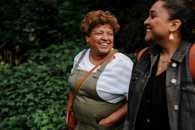
Menopause is a natural stage of life. It usually affects women between the ages of 45 and 55 but it can happen earlier.
Knowledge of the symptoms are useful for the individual, their relatives, carers and supporters of the person experiencing perimenopause and menopause.
What are Menopause and Perimenopause?
- Menopause affects anyone who has periods, usually between the ages of 45 and 55 but it can happen earlier. It is when your periods stop due to lower hormone levels.
- Perimenopause is when you have symptoms of menopause but your periods have not stopped. Perimenopause ends and you reach menopause when you have not had a period for 12 months.
- Perimenopause and Menopause can happen naturally, or for reasons such as surgery to remove the ovaries (oophorectomy) or the uterus (hysterectomy), cancer treatments like chemotherapy, or a genetic reason. Sometimes the reasons are unknown. It can cause symptoms like anxiety, mood swings, brain fog, hot flushes and irregular periods. These symptoms can start years before your periods stop and carry on afterwards.
The NHS website Menopause - NHS provides information on symptoms and more.
Signs and Symptoms of Menopause
Menopause -
Easy Read booklet
Symptoms of Menopause with BSL
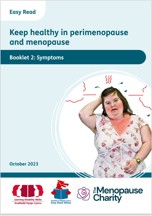
Keep Healthy in perimenopause and menopause -
Easy Read booklet
Good Health and Wellbeing
Eating healthily, exercising, looking after your mental wellbeing, gaining enough sleep and mindfulness can help with symptoms during perimenopause and menopause.
Find more information via the links below:
Peri Meri Menopause Moments project
The Peri Meri Menopause Moments project delivers online menopause sessions for men and employers as well as those going through treatment for cancer or experiencing early menopause. Peri Meri Moments, shares updates on current projects Peri Meri Menopause Moments Projects- Every-one and showcases how others across the county are supporting wellbeing, in their news bulletin
Some people feel group activities and attending regular meetings to share ideas through experiences help them, we are all individuals and so have an individual journey.
Treatments that may help with symptoms
The main medical treatment for menopause and perimenopause symptoms is hormone replacement therapy (HRT), which replaces the hormones that are at low levels.
There may be other treatments if you cannot, or choose not to, have HRT:
- Menopause - Treatment - NHS
- Herbal remedies and complementary medicines for menopause symptoms - NHS
- Other medicines for menopause symptoms - NHS
If you have been prescribed hormone replacement therapy (HRT) you may be entitled to an HRT prescription prepayment certificate from the NHS if the medicine is listed here eligible hormone replacement therapy (HRT) medicine to apply visit Getting a prescription prepayment certificate - GOV.UK
There are many more ways of monitoring your symptoms and hearing from people with real life experiences such as videos, podcasts and health tools.
Podcasts
There are a number of podcasts available online via your mobile and apps which explore, diet, wellbeing and individual experiences including:
- Explore various techniques - The Sleep Charity
- Menopause with Sarah and Paula - The It’s All About People Personalisation Podcast
- BBC Sounds - Search results for menopause
- Menopause and Cancer Podcast - Menopause and Cancer
CONNECTPlus - Lincolnshire ICB a downloadable women's health tool.

This app has information about a wide range of services available in Lincolnshire including:
- contraception options
- dealing with the menopause
- cervical screening locally
- advice around pre-conception care, breast pain or STI screening
- domestic violence